Guardians or Gatekeepers? The Industry Veterans Who Have Quietly Taken Over the CFPB
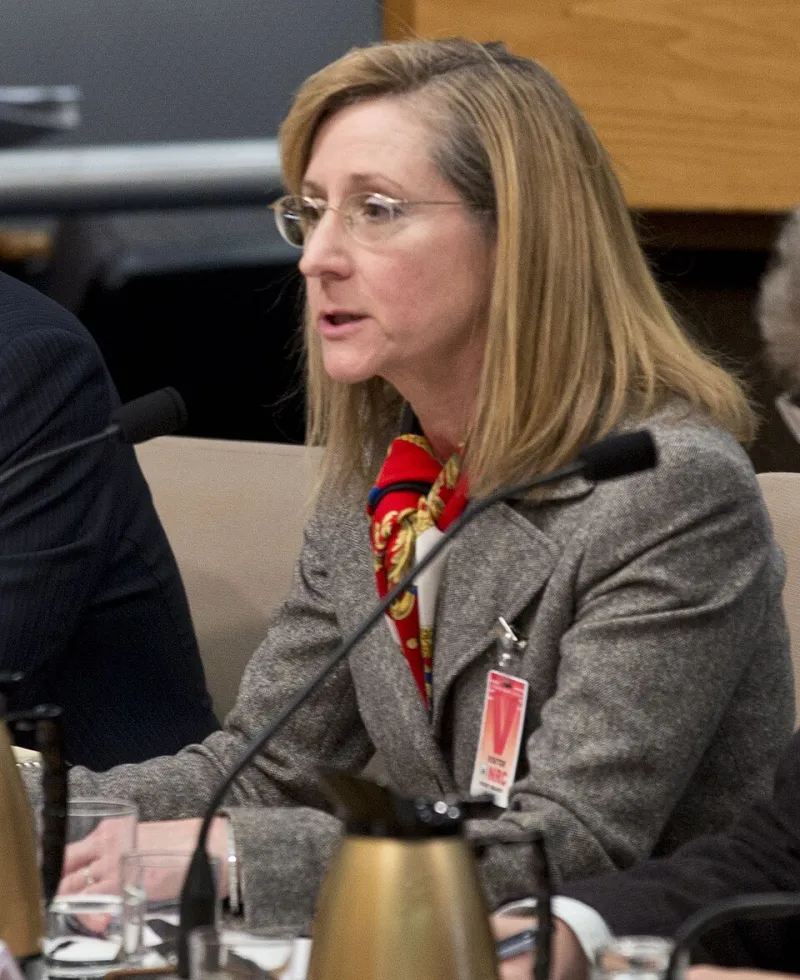
Photo: Nuclear Regulatory Commission from US, Public domain, via Wikimedia Commons
When Congress created the Consumer Financial Protection Bureau in the aftermath of the 2008 financial crisis, its architects promised something unprecedented: a federal agency whose singular loyalty would be to the American consumer. No divided mandates, no deference to Wall Street, no revolving door. A decade and a half later, the bureau's personnel files tell a considerably different story — one in which the line separating regulator from regulated has grown so thin as to be nearly invisible.
The pattern is by now familiar to anyone who has studied Washington's regulatory machinery. An agency is established with a mandate to police an industry. The industry, recognizing that it is better to shape enforcement from the inside than to resist it from without, methodically places its own veterans into key staff and advisory positions. Enforcement priorities shift. Guidance documents soften. Fines that once ran into the hundreds of millions are quietly renegotiated. The agency's public communications continue to project vigilance, while its internal operations drift steadily toward accommodation.
At the CFPB, this process has unfolded with particular efficiency.
The Personnel Problem
The bureau's senior ranks have, over the course of its existence, absorbed a remarkable number of alumni from the very industries it was designed to constrain. Former executives from payday lending operations — the short-term, high-interest loan businesses that the CFPB was specifically empowered to regulate — have occupied positions in the bureau's research, policy, and rulemaking divisions. Attorneys who built careers defending debt collection firms against consumer lawsuits have subsequently accepted roles shaping the bureau's enforcement posture toward those same firms.
Consultants whose client lists read like a directory of predatory lending operations have moved into supervisory roles with direct authority over examination protocols. In each instance, the appointments were processed through standard federal hiring procedures, disclosed in the manner required by law, and then largely ignored by a press corps that has grown accustomed to treating the CFPB as one of Washington's more sympathetic institutions.
The question that receives insufficient scrutiny is not whether these individuals disclosed their prior affiliations — most did — but whether those affiliations fundamentally compromised the bureau's ability to act as an impartial enforcer. Disclosure, after all, is not the same as recusal. And recusal, in the culture of federal regulatory agencies, is far rarer than the conflict-of-interest rules that nominally govern it would suggest.
Rollbacks Written in Fine Print
The evidentiary record is most legible not in personnel announcements but in regulatory outcomes. Consider the bureau's extended rulemaking history on payday lending. The original framework, developed through years of public comment and economic analysis, proposed strict limits on the number of consecutive short-term loans a borrower could take out — a direct response to the debt-trap cycle that consumer advocates had documented extensively. That framework was subsequently revised, delayed, and in critical respects gutted, with the most consequential consumer protections stripped out through a series of procedural maneuvers that attracted little mainstream coverage.
The officials who oversaw those revisions had, in several cases, professional histories that warranted considerably more scrutiny than they received. The same pattern recurs in the bureau's approach to debt collection enforcement. Actions that consumer law attorneys expected to result in substantial penalties were resolved for amounts that industry observers privately described as manageable. Examination findings that, under earlier bureau leadership, would have triggered formal enforcement proceedings were instead addressed through supervisory letters — non-public communications that impose no monetary consequences and generate no public record of wrongdoing.
None of this is technically corrupt. That is precisely what makes it so durable.
The Structural Logic of Capture
To understand why regulatory capture at the CFPB is not merely possible but nearly inevitable under current institutional arrangements, it is necessary to appreciate the bureau's peculiar staffing challenge. The financial products it regulates — mortgage servicing, credit card agreements, student loan administration, payday lending, debt collection — are operationally complex. Genuine expertise in these areas is concentrated overwhelmingly in the private sector. A bureau that refuses to hire anyone with industry experience will lack the technical knowledge to regulate effectively. A bureau that hires freely from industry will import, along with that knowledge, the professional loyalties and ideological assumptions that come with it.
This dilemma is not unique to the CFPB, but the bureau's structure amplifies it in ways that deserve attention. Unlike banking regulators that are funded through assessments on the institutions they supervise — a problematic arrangement in its own right — the CFPB draws its budget from Federal Reserve earnings, insulating it from the congressional appropriations process. That insulation, intended to protect the bureau from political interference, also reduces the scrutiny that annual budget negotiations would otherwise impose. The result is an agency that operates with unusual independence from both elected oversight and public accountability.
What Accountability Would Actually Require
The conservative critique of the CFPB has historically focused on its constitutional structure and its tendency toward regulatory overreach. Those concerns are legitimate. But the more immediate problem — and the one that most directly harms the ordinary Americans the bureau claims to serve — is not that the agency regulates too aggressively. It is that it regulates selectively, with a thumb on the scale that consistently advantages sophisticated industry players over the consumers who have no comparable access to the bureau's internal deliberations.
Meaningful reform would require, at minimum, a genuine cooling-off period prohibiting former industry executives from accepting bureau positions that touch their prior employers' regulatory interests. It would require that supervisory letters and informal enforcement resolutions be made public, so that the gap between the bureau's stated enforcement record and its actual outcomes becomes visible. And it would require a congressional oversight apparatus willing to examine not just the bureau's budget and legal authority but the specific personnel decisions and enforcement outcomes that reveal where its true institutional loyalties lie.
The American consumer deserves a financial regulator whose independence is structural rather than rhetorical. What the CFPB has delivered, too often, is the appearance of protection administered by the very professionals who spent their careers on the other side of the examination table. That is not consumer protection. It is consumer protection theater — and the audience has been paying the price for years.