Monetary Mandarins: How the Fed's Inner Circle Converts Public Power Into Private Wealth
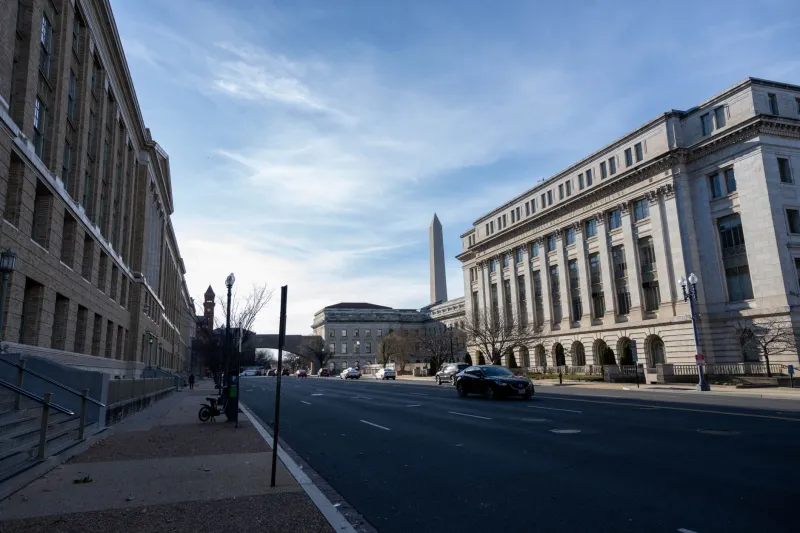
The Federal Reserve occupies a peculiar position in American life. It is neither fully public nor entirely private, neither elected nor truly accountable, yet it exercises more practical influence over the financial conditions of ordinary Americans than perhaps any other institution in Washington. Interest rate decisions made in the Fed's marble corridors ripple outward into mortgage payments, credit card balances, retirement portfolios, and business loan costs from Maine to California.
Given that magnitude of influence, one might reasonably expect the officials who wield it to be held to the most stringent ethical standards imaginable. One would be disappointed.
The Career Arc Nobody Discusses
The pattern is not hidden, exactly. It simply is not discussed with the seriousness it warrants. Senior Federal Reserve officials — regional bank presidents, governors, and senior staff economists — routinely depart their posts and arrive, within months, at asset management firms, investment banks, hedge funds, and financial consultancies that were, until very recently, subject to the policies those same officials helped craft.
Former Fed Chair Ben Bernanke joined Citadel, the hedge fund operated by billionaire Ken Griffin, as a senior adviser in 2015. Janet Yellen, who chaired the Fed before becoming Treasury Secretary, collected speaking fees totaling nearly a million dollars from Citadel and other financial institutions during the brief interval between those two government roles — fees she disclosed only after her nomination prompted scrutiny. Former New York Fed President William Dudley joined the board of Sifma, the securities industry trade group, after leaving the central bank. The examples accumulate with the reliability of compound interest.
What makes these arrangements particularly worth examining is not merely that they are financially generous, though they are. It is that the knowledge transferred in these transitions carries concrete market value. A former Fed governor who spent years in the room where rate decisions were debated does not suddenly forget the analytical frameworks, the internal dissent, the institutional instincts, and the informal signals that animated those deliberations. That knowledge is precisely what Wall Street is purchasing.
The Trading Scandal That Briefly Broke Through
In 2021, reporting revealed that multiple senior Federal Reserve officials had been actively trading stocks and financial instruments in 2020 — the very year the Fed was engineering an unprecedented emergency response to the COVID-19 economic collapse. Dallas Fed President Robert Kaplan had executed millions of dollars in trades in individual stocks and funds. Boston Fed President Eric Rosengren held positions in real estate investment trusts while the Fed was actively purchasing mortgage-backed securities to support that very market.
Both men resigned. The Fed announced ethics reforms. The story largely faded.
What the episode illustrated, however, was not simply a pair of bad actors operating outside institutional norms. It illustrated that the norms themselves were inadequate. The Fed's existing ethics framework had permitted these trades. Officials had filed the required disclosures. The problem was that the rules had been written with insufficient appreciation for how dramatically the central bank's market footprint had expanded since the 2008 financial crisis — or, less charitably, with insufficient will to restrict the personal financial activities of the institution's own leadership.
Structural Privilege, Not Individual Corruption
Conservative critics of government overreach have long argued that concentrated power inevitably generates concentrated corruption — not necessarily in the crude sense of envelopes of cash, but in the subtler and more durable sense of structural privilege that benefits those closest to the levers of authority. The Federal Reserve's revolving door with Wall Street is a case study in precisely this dynamic.
Consider what a former regional Fed president brings to a private employer. They bring a network of still-active relationships with current Fed officials. They bring credibility that commands premium speaking fees at investor conferences. They bring interpretive authority — when a former Fed insider offers analysis of the central bank's next move, markets listen differently than they do to outside commentators. And they bring, inevitably, a residual familiarity with how the institution actually thinks, as opposed to how it presents itself publicly.
None of this requires explicit disclosure of confidential information. The advantage is ambient, embedded in the person rather than in any particular document or communication. This is what makes it so difficult to regulate and so easy to ignore.
Cooling-Off Periods: Necessary but Insufficient
The Fed has implemented cooling-off periods that restrict certain post-employment activities for senior officials. These are not nothing. A one-year or two-year waiting period does create some friction in the revolving door. But critics argue, with considerable justification, that these restrictions are inadequate to the scale of the problem.
A cooling-off period does not erase institutional memory. It does not neutralize the network of relationships a former official carries into the private sector. It does not prevent a former Fed governor from advising a hedge fund on how to interpret public Fed communications — a service that requires no confidential information whatsoever, only the deep contextual fluency that comes from years inside the institution.
More fundamentally, cooling-off periods address the symptom rather than the disease. The underlying issue is that the Federal Reserve, as currently structured, creates an extraordinarily valuable form of human capital — expertise, access, and credibility — that the private financial sector is prepared to compensate handsomely. Until that incentive structure is addressed more directly, the revolving door will continue to spin.
What Reform Would Actually Require
Serious reform would require measures that the financial establishment has consistently resisted. Longer and more comprehensive post-employment restrictions. Mandatory blind trusts for all senior Fed officials during their tenure, covering not merely direct stock holdings but financial instruments whose value is sensitive to monetary policy. Rigorous public disclosure of all post-Fed employment and consulting arrangements, maintained in a searchable, centralized database. And genuine Congressional oversight, rather than the occasional hearing that generates headlines before subsiding into institutional inertia.
None of this is technically complicated. The obstacles are political, not procedural. The financial industry spends hundreds of millions of dollars annually on lobbying and political contributions, and it has a direct interest in preserving the informal channels that allow it to maintain proximity to the world's most consequential monetary authority.
The Deeper Question
The Federal Reserve was designed, in theory, to operate at arm's length from the private financial interests it regulates and supports. The reality, documented in career after career, is something considerably different. The institution is staffed and led, to a significant degree, by individuals whose professional trajectories arc from elite finance into central banking and back again — with each transit enriching the traveler and deepening the entanglement between public monetary authority and private financial gain.
Americans who wonder why monetary policy so consistently seems to prioritize financial market stability over the economic security of working households might consider, as one contributing factor, who is making that policy and where they expect to work when they are finished making it. The answer, examined carefully, is not reassuring.


