Invisible Donors, Visible Power: The Shadow Network Quietly Buying America's State Capitals
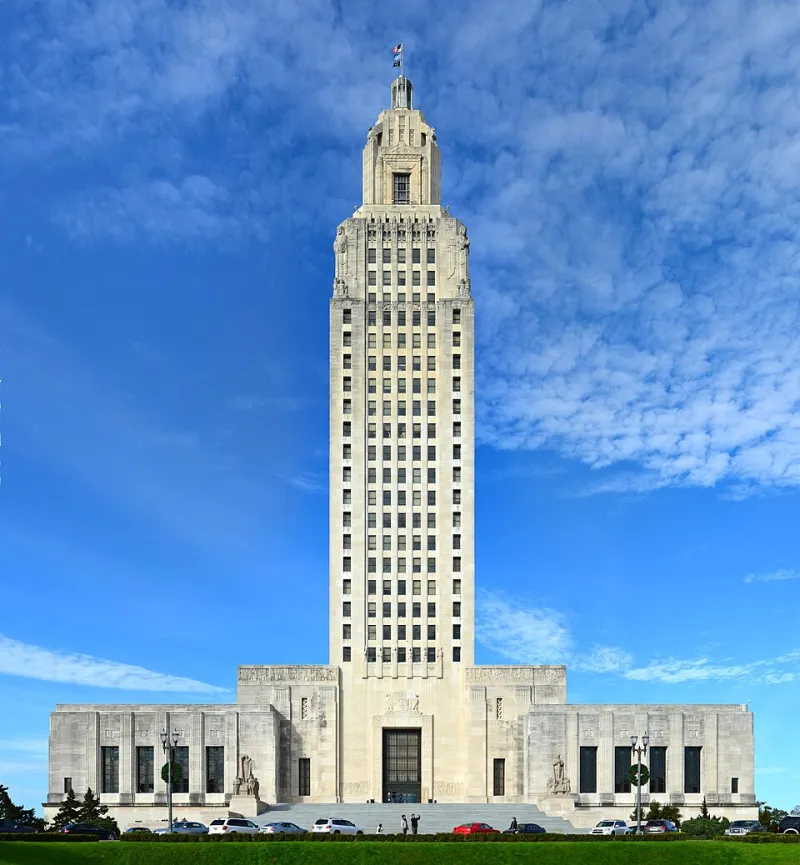
Photo: Chrismiceli, CC0, via Wikimedia Commons
The television cameras are trained on Washington. The pundits debate Cabinet appointments and Senate filibusters. Meanwhile, in state capitals from Phoenix to Harrisburg, a quieter and arguably more consequential contest is being decided—not by voters alone, but by a web of nonprofit organizations, limited liability companies, and donor-advised funds whose contributors the American public will likely never know by name.
This is not a peripheral phenomenon. It is, by any honest accounting, one of the most significant and underreported stories in contemporary American political life.
The Architecture of Anonymity
Under current federal law, 501(c)(4) social welfare organizations are permitted to engage in political activity as long as it does not constitute their "primary purpose." That deliberately elastic standard has created a vast and largely unregulated space in which unlimited sums of money can move from wealthy donors through layers of intermediary nonprofits and eventually into state-level political campaigns—with no mandatory public disclosure of original sources.
The mechanics are not especially complicated, though they are deliberately opaque. A donor writes a check to a 501(c)(4). That organization transfers funds to a second nonprofit, which may in turn fund a state-level political action committee or a so-called "issue advocacy" group running advertisements that stop just short of explicitly endorsing a candidate. By the time the money surfaces in a publicly accessible campaign finance filing, its origins are buried under multiple organizational layers.
Legal scholars have a term for this structure: a "daisy chain." Critics have a simpler one: laundering democratic accountability.
Down-Ballot, High Stakes
The strategic logic behind targeting state-level races is straightforward once you understand the actual distribution of governmental power in the United States. State attorneys general possess the authority to investigate corporations, challenge federal regulations, and determine which laws their offices will or will not enforce. State legislatures draw congressional district maps, set voting procedures, and establish education standards that shape the intellectual formation of the next generation. School boards select curricula, hire administrators, and set policies that touch the daily lives of millions of American families far more directly than any congressional resolution.
Yet the average school board race in a midsize American city might attract fewer than five percent of registered voters. Attorney general contests in non-presidential years frequently receive minimal press coverage. State legislative races are often decided by margins of a few hundred votes. For well-funded outside groups, this combination of high institutional value and low public attention represents an extraordinary return on political investment.
In the 2024 election cycle, outside spending on state legislative races reached levels that would have been unimaginable a decade ago. Several key battleground states saw individual down-ballot contests drawing outside expenditures that dwarfed the candidates' own fundraising totals. In some cases, the identity of the ultimate donors behind those expenditures remains unknown.
The Networks Behind the Networks
Researchers at campaign finance watchdog organizations have spent years attempting to map the organizational relationships connecting major dark money groups. What emerges is less a single coordinated conspiracy than a loose ecosystem of aligned interests—ideological, financial, and institutional—that nonetheless produces remarkably coordinated political outcomes.
On the progressive side, organizations with names evoking civic virtue and democratic participation have channeled substantial resources into state-level races focused on election administration, redistricting, and prosecutorial discretion. On the right, networks associated with major donor consortiums have invested heavily in school board and legislative races, with particular emphasis on states where demographic shifts are altering the political landscape.
Both sides operate within the same legal framework. Both sides exploit the same structural ambiguities. The difference, as Q+ News has observed in prior reporting, lies primarily in the degree to which the national press treats these activities as newsworthy. Progressive dark money operations have attracted a fraction of the investigative scrutiny directed at their conservative counterparts—a disparity that itself tells a story about the priorities of America's major newsrooms.
Why State Power Is the Real Prize
The nationalization of American politics has created a paradox. Voters and media alike have become increasingly focused on federal institutions even as the practical levers of governance have, in many respects, shifted back toward the states. The past several years have demonstrated this with unusual clarity.
State-level decisions have determined the practical implementation of federal education policy, the enforcement of immigration statutes, the administration of elections, and the legal landscape surrounding medical and cultural controversies. In each of these domains, the identity and ideology of state attorneys general, legislators, and even school board members has proven more consequential to ordinary Americans' daily experience than the positions taken by many members of Congress.
The donors funding the shadow networks understand this. They have read the institutional map carefully and concluded that a dollar spent influencing a state legislative primary delivers more durable policy return than the same dollar spent on a federal race that will be immediately countered by the opposing party's own massive spending apparatus.
The Press Absence That Enables the Problem
None of this would be possible at the scale it currently operates without a significant failure of the American press corps. Local and regional newspapers—the institutions historically responsible for covering state capitols, school board meetings, and county-level political contests—have experienced catastrophic revenue losses over the past two decades. Hundreds of local newsrooms have closed entirely. Those that survive frequently lack the staff to conduct the kind of sustained investigative work that tracing dark money networks requires.
National outlets, for their part, have largely retreated to covering the federal government and the most prominent national figures. The state capital beat, once a staple of serious American journalism, has become something of an endangered species.
The result is an information vacuum that outside spending groups have been remarkably adept at filling—with advertising, with coordinated messaging, and with the political outcomes that flow from an electorate that simply does not know who is funding the campaigns competing for its votes.
What Accountability Would Require
Restoring meaningful transparency to state-level political financing would require legislative action at both the state and federal levels—action that faces predictable resistance from the very interests that benefit from the current opacity. Several states have enacted enhanced disclosure requirements for political nonprofits operating within their borders, with mixed results in terms of enforcement and compliance.
At the federal level, proposals to require disclosure of donors to politically active nonprofits have repeatedly stalled, opposed by coalitions that span ideological lines and include organizations with no interest in seeing their funding sources become matters of public record.
For American voters, the practical implication is this: the officials who will most directly affect your children's education, the enforcement of laws in your community, and the drawing of the district lines that determine your congressional representation are being selected, in significant part, by donors whose identities you are not permitted to know.
That is not democracy functioning as designed. It is democracy functioning as captured. And until the national press decides that state capitals deserve the same scrutiny as the corridors of Washington, the invisible donors will continue to exercise very visible power.